Most people consider themselves reasonably well-calibrated when it comes to their own instincts. Not perfect, just roughly accurate. The uncomfortable part is that this confidence rarely comes from tracking how often you're right. It comes from how selectively you remember being wrong.
Think about the last time a strong gut feeling turned out to be correct. You probably still have it somewhere in memory. Now try to locate the last time you had an equally strong feeling and it went completely the other way. If that one is harder to find, that's not coincidence. Confirmed instincts tend to stick. Disconfirmed ones tend to soften, blur, or get quietly reclassified as "I had a funny feeling about that, actually."

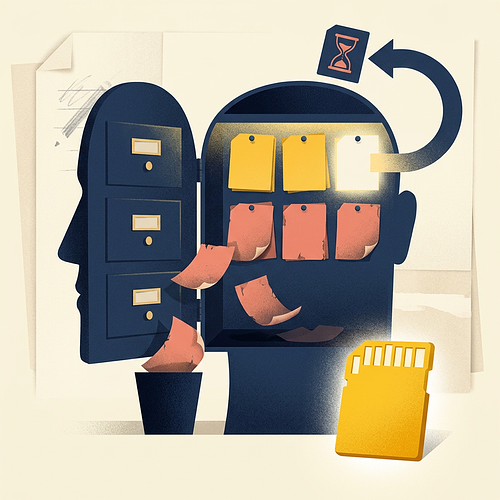
This isn't a character flaw. It's a feature of how human memory operates under uncertainty. Psychologists have a name for part of the machinery: the availability heuristic, described by Tversky and Kahneman, in which we judge how likely or frequent something is partly by how easily examples come to mind [13]. Vivid wins are easy to retrieve; forgotten misses aren't. The mental scoreboard can be skewed before we even start reasoning about it.
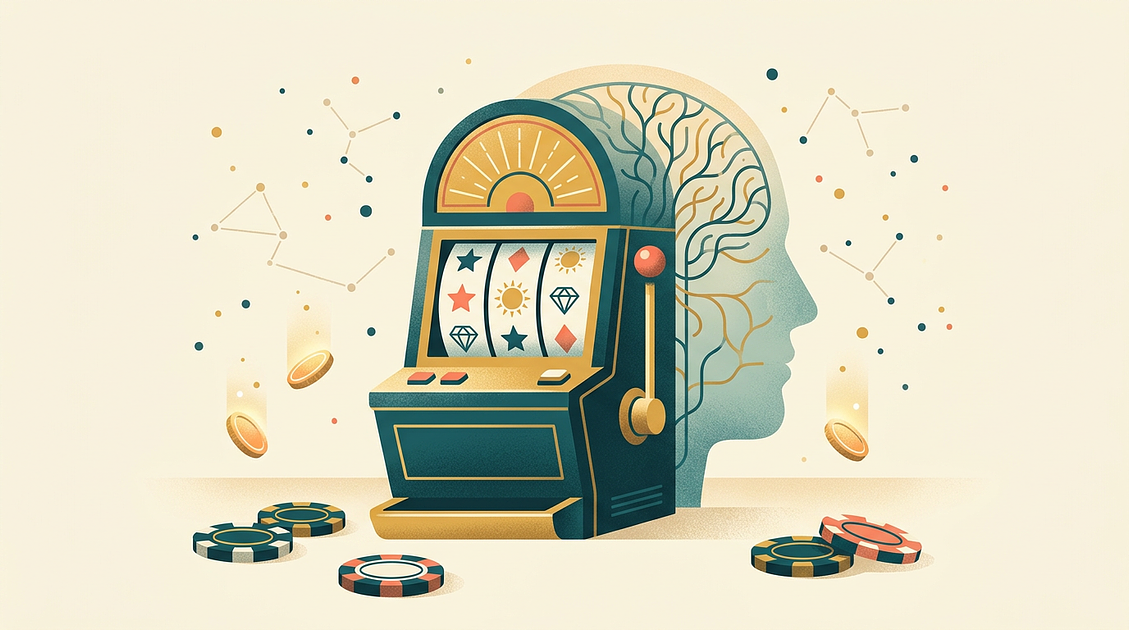
That's what makes pokies interesting to me, not as a product, but as a psychological test case. A pokie produces outcomes that have nothing to do with the player's intuition, yet the feeling of reading the machine, sensing a win coming or knowing when to push can still feel remarkably convincing. If the machine isn't learning anything about you, where does the feeling that you're learning something about the machine come from?
When Intuition Deserves to Be Trusted
There is a version of intuition that earns its name. A chess grandmaster who identifies the right move in seconds isn't guessing. An experienced emergency physician who suspects something is wrong before the test results confirm it isn't being irrational. Their intuition has been trained by repeated exposure to environments containing patterns that can actually be learned.
Kahneman and Klein's analysis of intuitive expertise identifies two conditions that matter: the environment must be regular enough to contain valid cues, and the person must have prolonged opportunities to learn those cues through sufficiently rapid and clear feedback [1]. A doctor who sees thousands of patients and repeatedly discovers which symptoms preceded which diagnoses has something real to learn from.
Chess works for much the same reason. Chase and Simon's research showed that experts recognise familiar configurations as meaningful patterns rather than processing every piece independently [14]. What feels like a sudden flash of intuition can actually be compressed experience retrieving something encountered many times before.
So experience can produce expertise, but only when the environment cooperates. Repetition alone isn't enough. There has to be something real to learn from, like a symptom that repeatedly points to the same diagnosis or a chess position where the same kind of move consistently works.
A Pokie Gives You Experience Without a Signal
A pokie looks superficially like an environment you could learn. You act, something happens immediately, you act again. Repeat that hundreds of times and it is easy to see why experience might begin to feel like knowledge.
Mathematically, though, the feedback loop is very different. Each spin is produced by a random number generator, and under the technical standards used to certify gaming machines, outcomes are required to be statistically independent of previous plays [2]. The machine doesn't know how long you've been sitting there, what happened on your previous spin or whether you feel "due" for a win. None of that changes the next draw.
That doesn't mean the experience feels like pure noise. Near-misses can feel meaningfully different from ordinary losses: experimental work found that near-miss outcomes increased the desire to continue playing and recruited some of the same reward-related circuitry involved in actual wins, despite producing no monetary reward [3]. Modern machines can also produce losses disguised as wins, where a spin returns less than the amount staked but still comes with celebratory audiovisual feedback. Research on multi-line slot machines found that these net-loss outcomes could produce arousal similar to actual wins and greater than ordinary losses [4].
So a player can accumulate an enormous amount of experience, much of it vivid and emotionally differentiated, without accumulating information that predicts the next outcome. That's an unusual combination: lots of feedback, lots of repetition, and nothing in the previous result that tells you what comes next.
The machine has no pattern for you to discover. The mind still has plenty of material from which to build one.
The Memory That Flatters You
Try a small experiment. Recall a time you had a strong gut feeling about something uncertain and turned out to be right. Now recall a time you felt equally confident and were completely wrong. Which one came faster?
For many people, the confirmed instinct is easier to retrieve. When a gut feeling precedes a good outcome, the two can become linked in memory: I felt it, then it happened. When the same confidence precedes failure, there is more room for reinterpretation. Maybe you weren't really that sure. Maybe you "knew something was off". Maybe the feeling itself becomes less memorable than the result.
Toneatto's work on cognitive distortions in problem gambling describes related patterns, including treating decisions as correct when they produce wins and reinterpreting losses in hindsight [5]. Combined with confirmation bias and the availability of memorable successes, this can produce a subjective track record that looks considerably better than the real one.
If you keep a mental ledger of how often your instincts are right, the problem isn't necessarily dishonesty. The accounting itself may not be neutral.
The Past Gets Smarter After the Outcome
Memory doesn't only decide what survives. It can also reconstruct what we thought before we knew the answer.
Baruch Fischhoff demonstrated this in his classic work on hindsight bias [6]. Once people knew an outcome, they tended to remember it as having been more foreseeable beforehand than it actually was. Even warning people about the effect did not reliably make it disappear.
Oppenheimer and Monin found a related distortion in reasoning about random sequences: people can work backwards from an unusual outcome and infer what the preceding sequence must have looked like [7]. Instead of the past predicting the outcome, the known outcome starts reshaping the story of the past.
That creates a particularly convincing illusion because the feeling itself is genuine. After something happens, it really can feel as though you knew it was coming. The problem is that the certainty may have arrived after the event and then quietly inserted itself into the memory of what came before.
When Luck Becomes a Good Decision
There's another route by which an outcome can make intuition look better than it was.
Baron and Hershey showed people a scenario in which a doctor had decided to perform a risky operation [8]. The participants weren't making the medical decision themselves; they were judging whether the doctor's decision had been a good one.
They were given the same information about the case and the same odds of success. The only difference was what happened next: one group was told the patient survived, while another was told the patient died. Even though the doctor's original decision had been identical, the group that saw the successful outcome judged it more favourably.
That's outcome bias. We know that the quality of a decision should be judged using the information available when it was made, yet once we know how things turned out, separating process from result becomes surprisingly difficult.
In gambling, luck can therefore become retrospective evidence of judgement. A gut feeling followed by a win looks like a good read; the same feeling followed by a loss looks foolish. Nothing about the original reasoning has changed. Only the information we gained afterwards has.
Two Opposite Intuitions Can Both Feel Right
This is where randomness produces one of its stranger contradictions.
After a run of wins, the hot-hand belief says momentum will continue: you're on, something is working, keep going. After a run of losses, the gambler's fallacy says almost the opposite: a win must be getting closer, the streak has to turn, keep going.
One says keep going because you're winning. The other says keep going because you're losing. Both can feel like intuition.
Croson and Sundali documented both tendencies in real casino behaviour [9]. Roulette players became more likely to move away from a number after it had recently won, consistent with the gambler's fallacy, while also tending to bet more after runs of personal success, consistent with a hot-hand belief.
The contradiction tells us something useful. Randomness doesn't dictate a single mistaken story. The mind can build different stories from the same kind of noise depending on what has just happened.
There is an important wrinkle here. The idea of a "hot hand" was originally studied in basketball, where a player who makes several shots in a row can start to look as though they are "on a roll" and therefore more likely to make the next one. Gilovich, Vallone and Tversky's influential research argued that this apparent streak effect was largely a cognitive illusion [10]. Later work by Miller and Sanjurjo complicated that conclusion by identifying a selection-bias problem in traditional analyses of shooting streaks and showing that small genuine hot-hand effects can exist in some skill-based settings [11].
That distinction matters here. In basketball, the person taking the shot can genuinely change from one attempt to the next through factors such as rhythm, confidence, fatigue or technique. A pokie's random number generator has no equivalent mechanism. It cannot become "hot" or "cold". So a streak can contain useful information when the underlying system itself can change; when the system is an independent random draw, the streak is history rather than a signal.
Experience Is Not the Same as Expertise
This leaves a broader question: if experience normally helps us learn, what happens when we accumulate experience in an environment that cannot teach us what happens next?
Robin Hogarth's distinction between "kind" and "wicked" learning environments is useful here [12]. Kind environments provide feedback that genuinely helps correct future judgement. Wicked environments provide feedback that may be incomplete, noisy, delayed or misleading, allowing people to accumulate experience without necessarily becoming better calibrated.
The uncomfortable part is that both can feel like learning from the inside. In both, you recognise familiar situations, remember previous outcomes and become more confident in your reactions. But confidence and accuracy only grow together when the environment gives experience something reliable to learn.
Pokies make the distinction unusually clean because repetition is abundant while predictive information between spins is absent. But the question travels much further than gambling. Financial decisions, hiring, forecasting, relationships, medicine, sport and management all contain different mixtures of signal, noise and feedback. Simply having done something many times doesn't tell you how much the environment has actually taught you.
So perhaps the useful question when a gut feeling arrives isn't does this feel right? It's what kind of feedback loop taught me to feel this, and was there actually something in that loop to learn?
The Machine Has No Memory of You
The pokie doesn't know you. It doesn't know how long you've been there, whether you're concentrating or whether you've developed a feel for its rhythm. Every spin begins without regard for what happened before [2].
Your mind doesn't work that way. It remembers some experiences more easily than others, reconstructs what it expected after learning what happened, judges decisions through their outcomes and looks for patterns across events. None of those processes is inherently foolish. In the right environment, they are part of how experience becomes expertise.
The problem is that the feeling of expertise doesn't come with a certificate telling you whether the environment deserved to produce it.
That's where the original question becomes more interesting. People may overestimate intuition in random environments not simply because they misunderstand probability, but because the machinery that normally allows us to learn from experience keeps running even when the environment has stopped providing a learnable signal.
A feeling of knowing tells you something about your confidence. It doesn't necessarily tell you something about the world.
The machine has no memory of you. The harder question is whether the memory you've built of it deserves your confidence.
References
- Kahneman, D., & Klein, G. (2009). Conditions for intuitive expertise: A failure to disagree. American Psychologist, 64(6), 515–526. https://doi.org/10.1037/a0016755
- Gaming Laboratories International. (2011). GLI Standard #11: Standards for Gaming Devices in Casinos, Version 2.1 (§§3.3.1–3.3.7). https://gaminglabs.com/wp-content/uploads/2018/09/GLI-11-v2-1.pdf
- Clark, L., Lawrence, A. J., Astley-Jones, F., & Gray, N. (2009). Gambling near-misses enhance motivation to gamble and recruit win-related brain circuitry. Neuron, 61(3), 481–490. https://doi.org/10.1016/j.neuron.2008.12.031
- Dixon, M. J., Harrigan, K. A., Sandhu, R., Collins, K., & Fugelsang, J. A. (2010). Losses disguised as wins in modern multi-line video slot machines. Addiction, 105(10), 1819–1824. https://doi.org/10.1111/j.1360-0443.2010.03050.x
- Toneatto, T. (1999). Cognitive psychopathology of problem gambling. Substance Use & Misuse, 34(11), 1593–1604. https://doi.org/10.3109/10826089909039417
- Fischhoff, B. (1975). Hindsight ≠ foresight: The effect of outcome knowledge on judgment under uncertainty. Journal of Experimental Psychology: Human Perception and Performance, 1(3), 288–299. https://doi.org/10.1037/0096-1523.1.3.288
- Oppenheimer, D. M., & Monin, B. (2009). The retrospective gambler's fallacy: Unlikely events, constructing the past, and multiple universes. Judgment and Decision Making, 4(5), 326–334. https://www.cambridge.org/core/journals/judgment-and-decision-making/article/95DA11F5AE78BA5924DA185EEAD075A3
- Baron, J., & Hershey, J. C. (1988). Outcome bias in decision evaluation. Journal of Personality and Social Psychology, 54(4), 569–579. https://doi.org/10.1037/0022-3514.54.4.569
- Croson, R., & Sundali, J. (2005). The gambler's fallacy and the hot hand: Empirical data from casinos. Journal of Risk and Uncertainty, 30(3), 195–209. https://doi.org/10.1007/s11166-005-1153-2
- Gilovich, T., Vallone, R., & Tversky, A. (1985). The hot hand in basketball: On the misperception of random sequences. Cognitive Psychology, 17(3), 295–314. https://doi.org/10.1016/0010-0285(85)90010-6
- Miller, J. B., & Sanjurjo, A. (2018). Surprised by the hot hand fallacy? A truth in the law of small numbers. Econometrica, 86(6), 2019–2047. https://doi.org/10.3982/ECTA14943
- Hogarth, R. M. (2001). Educating Intuition. University of Chicago Press.
- Tversky, A., & Kahneman, D. (1973). Availability: A heuristic for judging frequency and probability. Cognitive Psychology, 5(2), 207–232. https://doi.org/10.1016/0010-0285(73)90033-9
- Chase, W. G., & Simon, H. A. (1973). Perception in chess. Cognitive Psychology, 4(1), 55–81. https://doi.org/10.1016/0010-0285(73)90004-2